
Stories
The Six Sacred Abodes of Murugan
ஆறுபடை வீடு
Six hills, shores and groves where devotees have gathered for centuries. These are told as living traditions of devotion, cherished and retold across generations.
Arupadai Veedu means the six sacred abodes of Murugan in Tamil devotional tradition — six places of worship, each with its own atmosphere and its own remembered story. Pilgrims journey among them to encounter complementary dimensions of the same grace: courage, wisdom, love, discipline, peace and grace.

Abode 1
Tirupparankundram
Sri Subramanya Swamy
After the victory over Surapadman, Murugan's sacred marriage to Deivanai is celebrated at Tirupparankundram. Devotees remember this hill shrine as a place of gratitude, where triumph gives way to blessing and union.
- Known for
- The first of the six abodes; the hill shrine near Madurai
- Devotional meaning
- Victory, gratitude and sacred union
Abode 2
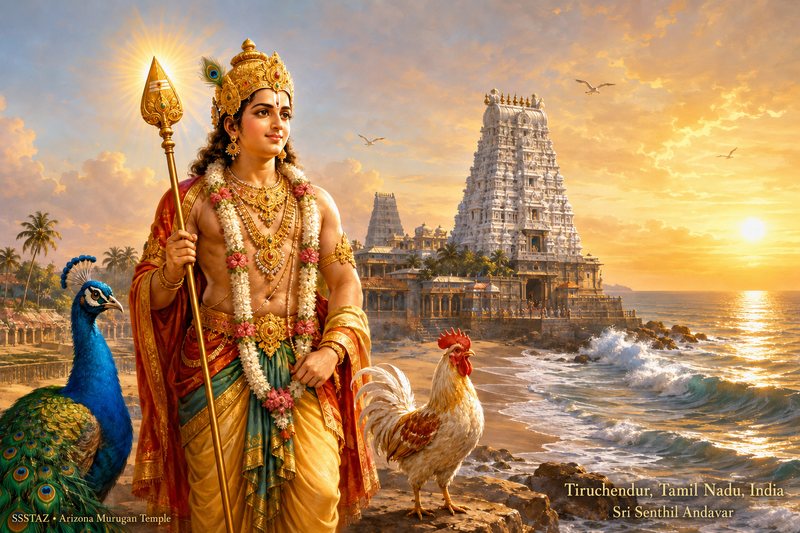
Tiruchendur
Sri Senthil Andavar
On the seashore at Tiruchendur, Murugan's victory over Surapadman is remembered during Skanda Sashti. The tradition also carries a message of transformation and divine compassion — the vanquished is not cast away, but taken into the Lord's own service.
- Known for
- The seashore abode on the Bay of Bengal, Thoothukudi district
- Devotional meaning
- Courage, justice and transformation

Abode 3
Palani
Sri Dhandayuthapani Swamy
In the divine mango tradition, Murugan returns from circling the world and, disappointed by the result, withdraws to Palani. As Dhandayuthapani he stands with only a staff, embodying renunciation and the wisdom expressed in “Pazham Nee” — You are the fruit.
- Known for
- The hill shrine of Dandayudhapani in Dindigul district
- Devotional meaning
- Renunciation and self-knowledge

Abode 4
Swamimalai
Sri Swaminatha Swamy
At Swamimalai, Murugan becomes the teacher and explains the sacred meaning of Pranava, Om, to Shiva. The child becomes guru to His own father, and the Lord of all listens with folded hands.
- Known for
- The guru shrine near Kumbakonam, Thanjavur district
- Devotional meaning
- Wisdom and humility

Abode 5
Tiruttani
Sri Thanigai Murugan
Tiruttani represents Murugan's serenity after battle and the restoration of inner peace. Devotional traditions also connect this gentle hill with Valli, and devotees climb its steps seeking calm, healing and a settled heart.
- Known for
- The hill of peace after battle, Tiruvallur district
- Devotional meaning
- Healing, balance and compassion
Abode 6
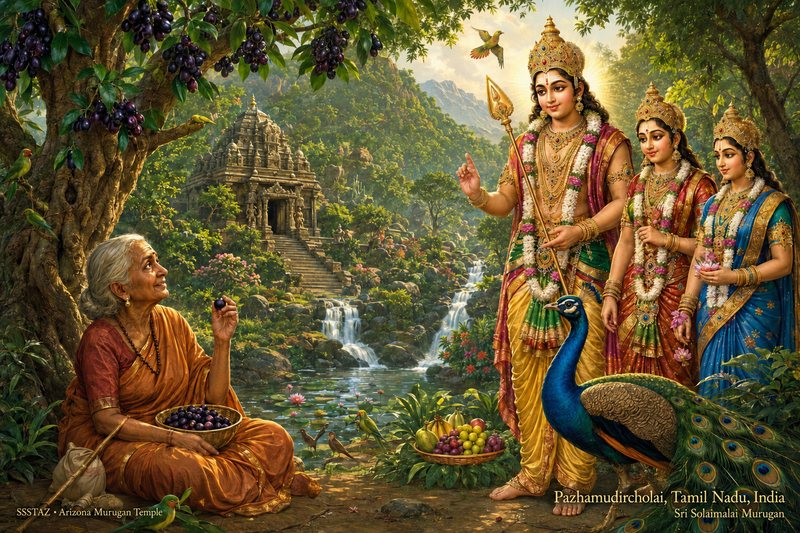
Pazhamudircholai
Sri Solaimalai Murugan
In the lush grove near Madurai, Murugan is worshipped with Valli and Deivanai. The beloved Avvaiyar tradition teaches that even great learning should remain open to humility — the wise poetess is gently reminded by a child.
- Known for
- The forest-grove abode in the hills near Madurai
- Devotional meaning
- Grace, learning and abundance
These are devotional traditions and spiritual reflections. Prayer is personal, and devotees may worship Lord Murugan at any abode for any sincere need.
Bring these abodes closer to Arizona